

What Kind Of Animal Products Is Smuggled
- Contempo surveys by WWF and TRAFFIC have identified 10 of the about widely trafficked animals in the Golden Triangle.
- These summit 10 animals are: the tiger, elephant, pangolin, bear, rhino, serow, helmeted hornbill, gaur, leopard, and turtles.
- The wildlife markets in the Gold Triangle cater by and large to tourists from Red china and Vietnam, the written report noted.
Large casinos, hotels, shopping malls and markets flourish in Southeast Asia'southward Golden Triangle — the area where Thailand, Laos, and Myanmar converge. These gambling halls and markets, known to exist centers of prostitution and drug trafficking, take at present emerged as hubs of wild animals trade.
From tiger skin and bones to skulls, forelegs and gall bladder of the goat-similar serow, the Gilded Triangle'southward shops and hotels take become a haven for illegal wildlife products, according to recent surveys by WWF and TRAFFIC, the wildlife trade monitoring network.
Based on these surveys, the teams take identified 10 of the near widely trafficked animals in the Golden Triangle: the tiger, elephant, pangolin, bear, rhinoceros, serow, helmeted hornbill, gaur, leopard, and turtles.
"Comport farms and tiger farms, along with wide open wildlife markets beyond the Aureate Triangle, are a menace to wild populations of these species and should be closed," Neb Possiel, WWF-Greater Mekong regional conservation manager, said in a statement. "This region has a deserved reputation equally both a destination and source of some of the world's most endangered species and that has to cease or these species could go extinct."

The wildlife markets cater by and large to tourists from Red china and Vietnam, the survey teams noted in a report. Smashing to swallow wild animal parts, either in traditional medicines, food, or as symbols of wealth, these often-elite tourists travel to MongLa and Tachilek in Myanmar, and border areas similar Boten and the Gilded Triangle Special Economic Zone (GT SEZ) in Laos — a joint venture between a Chinese company called the Kings Romans Grouping, and the Laos government.
"Visitors [in GT SEZ] can openly purchase endangered species products including tigers, leopards, elephants, rhinos, pangolins, helmeted hornbills, snakes and bears – smuggled in from Asia and Africa," the Environmental Investigation Bureau had reported in 2015. "Restaurants [offer] endangered species on their menus, from "sauté tiger meat" and bear paws to reptiles and pangolins; one concern kept a live python and a bear cub in cages, both of which were bachelor to swallow on request."
Meet the peak 10 nearly widely traded animals in the Golden Triangle:
1. Tiger
Tigers — both poached from the wild and captively farmed — are favorites in the Golden Triangle. Nearly every part of the tiger is on auction there, the report notes, either in the form of traditional medicine or every bit decoration, tiger wine or meat.
2. Elephant
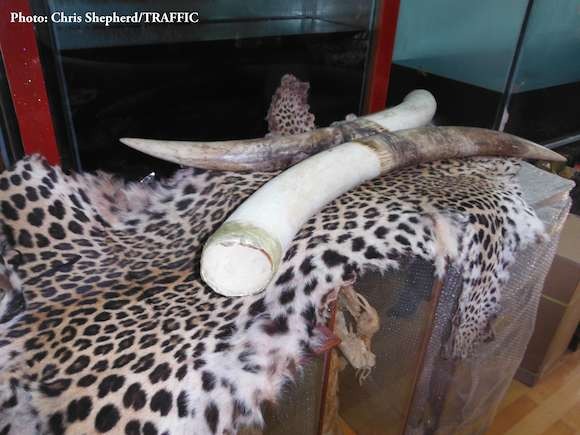
Over again, the survey teams found nearly every function of elephant on sale in the region, including elephant teeth, hair, bones, tails, trunks, and ivory. Even elephant skin was bachelor for consumption in restaurants as a cure for tummy ailments, the authors write. While much of the elephant ivory is thought to be smuggled from Africa, elephants in Myanmar are existence poached, then skinned, to see the demands of elephant skin.
3. Pangolin
Chinese and Vietnamese tourists in the Golden Triangle seek out pangolin meat, considered a delicacy, as well as pangolin scales, which are used in traditional medicine. International merchandise in all eight species of pangolins — four African and iv Asian — is prohibited nether international law.
4. Rhinoceros
Most rhino products in the Gilded Triangle are believed to have been smuggled from Africa. Rhino horns are, again, popular in traditional medicine, and are also bought equally a symbol of wealth, particularly in Vietnam, according to the study.
five. Carry
The Golden Triangle region is home to bear farms, where bile is extracted from species like the Asiatic Blackness Behave and the Malaysian Sunday Bear. The bile from their gall bladders is used in traditional medicine, and the bears' paws are used to make soup. Many of these bear farms likely house bears that accept been illegally captured from the wild, the report says.
six. Serow
The goat-similar serow that lives in remote mountains across Asia is however another commonly traded beast in the Gilt Triangle's markets. The survey teams establish serow horns, skulls, forelegs, heads, gallbladders and medicinal oil on sale. The animal's parts are especially prized in Laos traditional medicines.
7. Helmeted hornbill
This critically endangered bird has a solid nib casque that is extremely prized in Cathay, where carved casques are used an ivory substitute. Chinese demand for these casques take led to a desperate decline in helmeted hornbill numbers, the report notes, specially in Indonesia.
8. Gaur
This wild species of cattle is being poached mostly for its majestic horns. Surveys of the markets of the Golden triangle revealed horns, gallbladders for medical purposes and whole heads as trophies, according to the report.
9. Leopard
Leopard products in the markets of the Golden Triangle range from entire skins to heads sold as trophy. The origin of these leopard parts are, however, difficult to pinpoint, the report says. Among the leopards on auction, the teams found that clouded leopards were being traded in particularly loftier numbers.
10. Turtle
The survey teams found numerous turtles and tortoises in the markets of the Gilt Triangle being sold as alive animals, decorative items and food. Some turtles on display included softshell turtles, Asian box turtles and impressed tortoises.
Banner prototype of Sumatran tiger by Rhett A. Butler.
 Article published past
Source: https://news.mongabay.com/2017/11/top-10-most-widely-traded-animals-in-the-golden-triangle-identified-in-new-report/
Posted by: keeleycopichatte59.blogspot.com
0 Response to "What Kind Of Animal Products Is Smuggled"
Post a Comment